The recent move by Framework to embrace Oculink as part of its strategy signals a pivotal moment for the underdog external I/O standard, which has struggled to gain widespread adoption in an industry dominated by Thunderbolt and USB4. Framework’s decision to create the Oculink Dev Kit for its Laptop 16 is more than just a technical upgrade; it represents a strategic bet that could redefine the external graphics capabilities of laptops and their appeal to gamers and power users.
Breaking New Ground in External GPU Support
Framework’s initiative to integrate Oculink into their devices brings a refreshing sense of innovation to a stagnant market. Oculink promises a unidirectional bandwidth of 128Gbps with its 8-lane 8i interface, slightly surpassing Thunderbolt 5's 120Gbps in unidirectional graphics mode. This is crucial for high-performance applications, particularly gaming and content creation, where bandwidth constraints can limit performance. Historically, Oculink has been sidelined, often associated with niche players rather than mainstream brands. By integrating this technology in a widely recognized product, Framework is positioning Oculink as a serious contender in the external GPU space.
Understanding the Cooling Dilemma
A key obstacle in high-performance laptops is cooling. While desktop GPU cooling solutions are standard, laptop designs often sacrifice performance for portability. Here’s the crux: integrating powerful GPUs into slim laptops is impractical due to heat generation. By placing a GPU external to the chassis—utilizing Oculink’s capabilities—Framework sidesteps this hurdle entirely. Not only does this approach reduce the thermal load on the internal components, but it can also lead to lighter, more portable laptops without compromising performance.
Framework’s Innovative Design Solutions
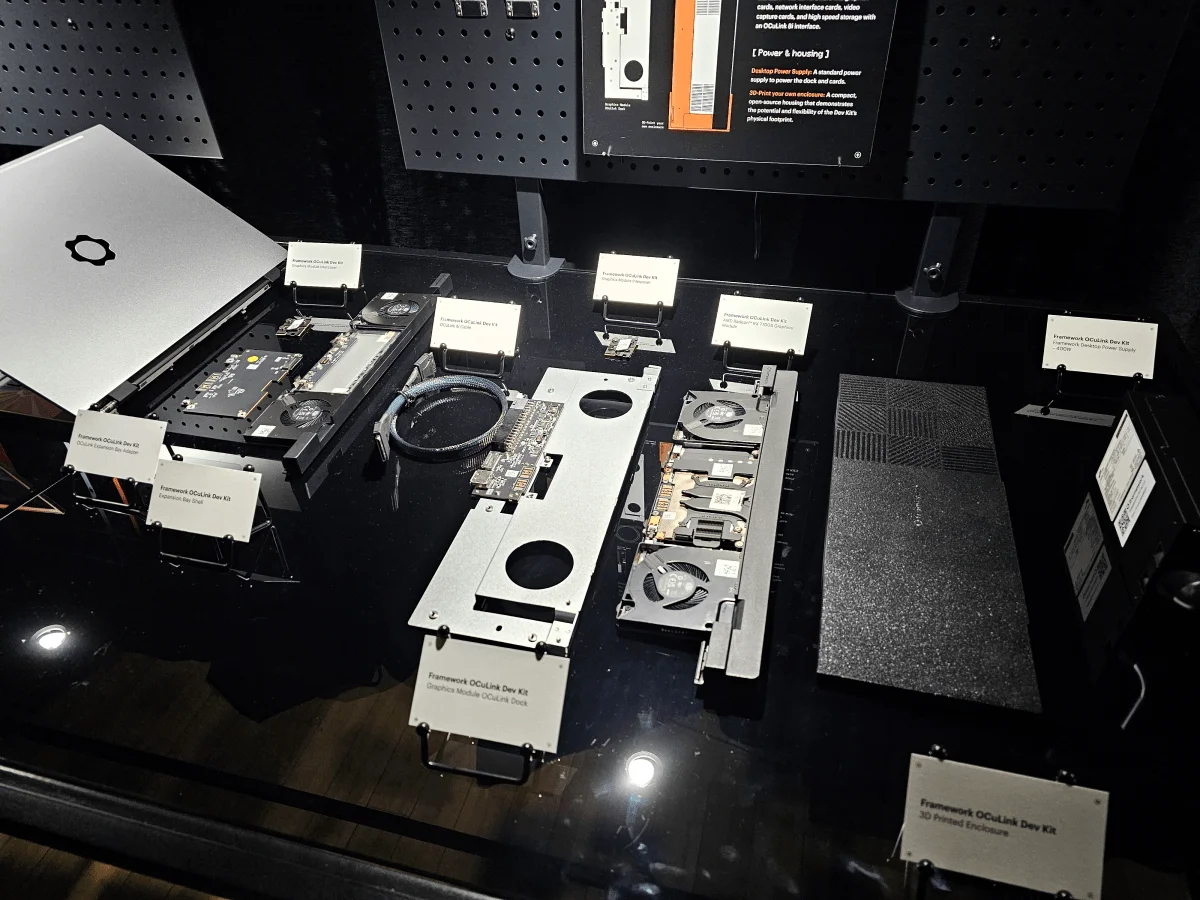
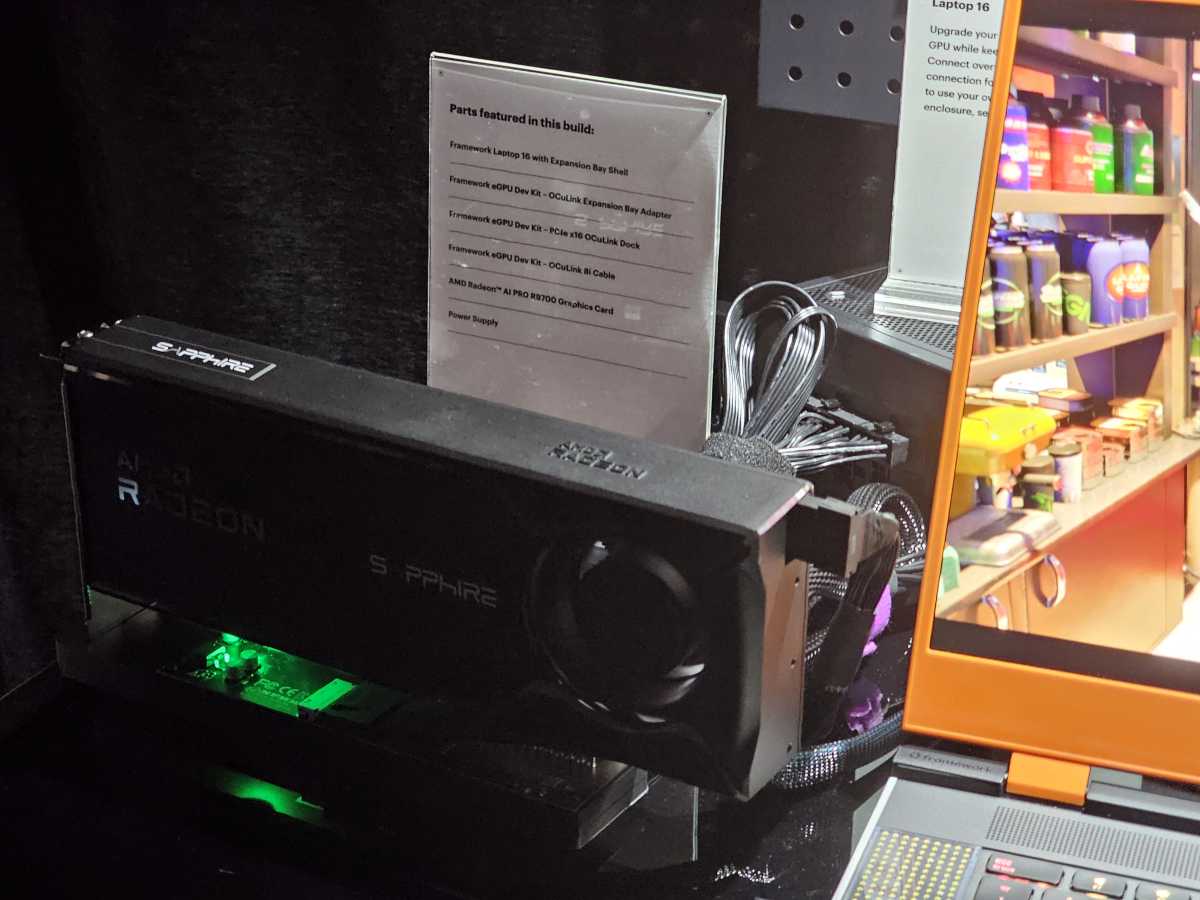
The Framework Laptop 16 is ingeniously designed to facilitate this external connection. Equipped with an Expansion Bay, it seamlessly integrates various graphics modules through an internal PCI Express x8 connection. This design allows users to select between two notable solutions: the Graphics Module Oculink Dock for Framework’s proprietary equipment, or a more generic PCIe Oculink Dock compatible with off-the-shelf GPUs. The choice enables flexibility for users ranging from casual gamers to serious developers.
Mark Hachman / Foundry
Potential Ramifications for the Industry
The success of this initiative hinges on more than just technical feasibility; it requires buy-in from graphics card manufacturers and broader ecosystem support. Historically, Oculink's lack of traction can be attributed to its absence in consumer devices and in the offerings of accessory manufacturers. Many potential adopters may view Oculink as an untested alternative to established standards. Yet Framework's backing could catalyze a shift, encouraging hardware manufacturers to explore Oculink in their own products.
It’s noteworthy that Oculink is open source, removing some barriers to entry that proprietary technologies impose, such as licensing fees associated with Thunderbolt. This could potentially democratize access to high-speed external GPUs, empowering smaller manufacturers and DIY enthusiasts alike.
Mark Hachman / Foundry
Framework's Positioning in a Competitive Market
Framework's move demonstrates a commitment to innovation in a tech space often stifled by incumbents. Introducing Oculink at a time where users increasingly demand both portability and power aligns with trends toward mobile workstations capable of handling intensive tasks. However, questions remain about the broader acceptance of this standard. Will other laptop makers follow suit, or will Framework remain an outlier? Can Oculink carve out a meaningful niche amidst the dominance of Thunderbolt and USB4? The next steps for Framework will be critical in defining the future utility and acceptance of Oculink as a viable alternative.
What’s Next?
Framework is not just releasing new devices; they’re reshaping the conversation around laptop performance and expandability. As they venture further with Oculink, their success or failure will impact the prospects of this standard in the graphics market. For industry professionals, the emergence of Oculink serves as a potential indicator of shifting philosophies in PC design—where modularity and performance meet to create a more versatile computing experience. Therefore, keeping an eye on how this scenario unfolds could offer valuable insights into the evolving landscape of external graphics and high-performance computing.