Unpacking Google Cloud's Latest Compute Offerings
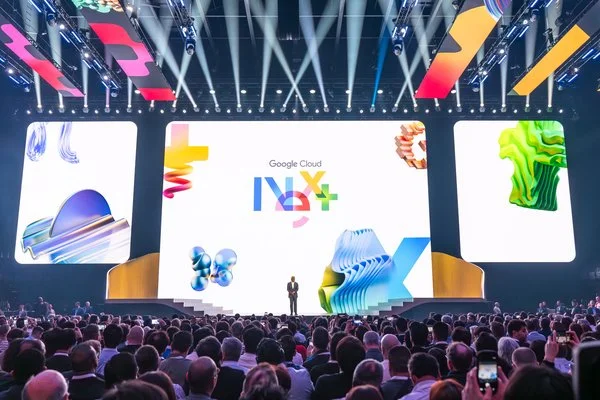
At Google Cloud Next, Google unveiled an impressive set of compute innovations designed to cater specifically to the pressing demands of both general-purpose applications and sophisticated AI workloads. These advancements promise not only elevated performance but also reduced costs—an appealing combination for IT decision-makers and developers alike.
What stands out here is the balancing act organizations must perform between the rapidly changing world of artificial intelligence and traditional computing workloads, such as handling web servers, databases, and enterprise applications. AI-driven tasks can often generate unpredictable demand on computing infrastructure, leading to potential overload, especially during peak times. Picture a scenario where a simple user query on a travel app triggers a cascade of concurrent tasks—this could easily overwhelm conventional systems, causing slowdowns that harm user experience.
Google aims to tackle this issue head-on with its fluid compute approach. The new infrastructure allows for real-time adaptability to fluctuating workloads, granting organizations the agility needed to maintain performance and manage costs effectively. This dynamic architecture utilizes automated orchestration through Google Kubernetes Engine (GKE) and introduces new tools like the Agent Sandboxes, which quickly set up secure execution environments.
Integrating AI with Everyday Workloads
One of the key innovations is the introduction of GKE Agent Sandboxes paired with Google’s Axion processors. This setup enables teams to launch numerous execution environments securely, crucial for managing the unpredictable nature of AI tasks. The aim is to eliminate the delays typically associated with provisioning and to optimize total cost of ownership, making it feasible to innovate in AI without financial strain.
Here’s what’s new in Google Cloud’s compute portfolio:
- **Google Axion N4A**: Now generally available, these Arm-based CPUs deliver significant efficiency, offering up to double the price-performance ratio relative to current generation x86 VMs. This is particularly beneficial for startups and enterprises running cost-sensitive applications.
- **GKE Agent Sandbox**: This is the industry’s first native sandbox service among the major cloud providers, aimed at executing untrusted code while retaining low latency and high performance. It's a game-changer for developers looking to safely implement AI workloads without incurring heavy costs.
- **C4A.metal instances**: In preview, these bare metal instances are designed to handle demanding applications like Android development and security tasks without the complexity associated with virtualization.
- **Expanded support for C4 instances with Xeon 6**: Designed for high-performance AI applications, these instances now provide enhanced throughput, improving price-performance metrics against similar offerings from competitors.
These advances are set to reshape how organizations handle compute resources. Companies like Unity and Deutsche Börse are already seeing substantial benefits, such as improved latency and faster time to market, by migrating to Google’s newer instance types.
Meeting Demands Across the Board
Apart from improving AI and general-purpose workloads, Google also addresses the needs of organizations running I/O intensive applications. Legacy systems often create bottlenecks due to limitations in data handling, which can stifle broader organizational efficiency. Google Cloud’s latest offerings include accelerated Hyperdisk performance, permitting data pipelines to scale independently of compute resources, crucial for uninterrupted AI training and other latency-sensitive tasks.
For instance, the newly previewed **C4N** and **M4N** instances are designed to maximize throughput while minimizing resource over-provisioning—ideal for dynamic environments where quick adjustments are necessary to maintain performance. These advancements allow organizations to handle fluctuating demands without the impacts typically associated with outdated infrastructure.
The industry is taking notice. Companies from Ericsson to Teradata are leveraging these innovations to facilitate high-performance processing for AI and critical workloads, demonstrating how Google's compute capabilities can push past conventional limits.
In a climate where efficiency and adaptability are paramount, Google’s announcements suggest they're not just keeping pace with market demands but actively shaping the trajectory of cloud computing infrastructure. If you're involved in cloud strategy, these developments could redefine how you think about compute scalability and cost efficiency.
Looking Ahead to Z4M's Impact
The introduction of Z4M marks a pivotal shift in cloud computing capabilities, particularly for businesses focusing on data-intensive applications. With the ability to handle an impressive 168 TiB of local SSD storage and a staggering network bandwidth of up to 400 Gbps, Z4M is tailored for heavy lifting—think AI and machine learning tasks, as well as distributed parallel file systems. This isn't just about numbers; it reflects a serious commitment to providing infrastructure that thrives under pressure. The combination of these bare-metal shapes with integrated accelerators ensures low-latency access to critical data.
However, what's more intriguing is the timeline. If preview instances are set to launch in Q3 2026, many businesses are likely weighing their long-term strategies against a rapidly evolving technological backdrop. This is a compelling opportunity for companies already entrenched in AI and machine learning, as they can potentially reshape their operational frameworks before Z4M becomes widely available.
What Customers Are Saying
Real-world applications paint a clearer picture of Z4M’s potential. Take Shopify, for instance. Over Black Friday weekend, they processed a colossal $14.6 billion—fueled by the power of Google's storage solutions. The capability to handle 136 million packages for 81 million buyers without hiccup speaks volumes about the reliability of the infrastructure.
On the other end, HubX's application of Hyperdisk ML showcases Z4M's performance in action. In an age where speed dictates user satisfaction, HubX needed a solution to eliminate bottlenecks in their AI-driven mobile applications. The acceleration of pod initialization times by 30x during peak traffic is a testament to how Z4M can transform user experiences. This type of efficiency not only drives user engagement but also optimizes costs associated with unused accelerators.
Beyond Bottlenecks
One of the standout features of Google Cloud's ecosystem is its fluid compute architecture. This concept of adaptive cloud infrastructure means that foundational workloads and AI applications won't be fighting for space and performance. In an era that prizes agility, this capability allows companies to operate at peak efficiency, sidestepping typical bottlenecks.
If you're operating in this competitive tech landscape, understanding how to harness these advancements is essential. While Z4M might seem like just another offering at first glance, the broader implications for infrastructure efficiency and adaptability in an increasingly data-driven world are profound.
Take the Next Step
For those ready to dive into this next phase of cloud computing, the journey starts now. Access the
Google Cloud console and begin spinning up VMs for your upcoming projects. Or, if you're contemplating a migration, explore
Migration Center for AI-powered tools that can strategize your transition. With innovations like Z4M, the future of your computing capacity is about to get even more exciting.