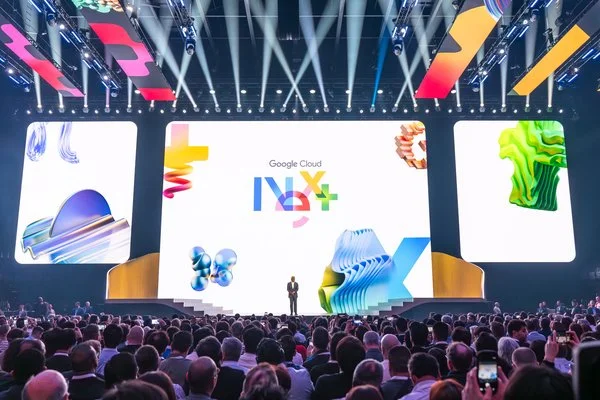
Advancing Towards Agentic Intelligence
AI is no longer just a tool for responding to inquiries; it's moving towards a level of reasoning that allows it to take proactive actions. Businesses aiming for leadership in this new agentic phase must invest in computing infrastructure that meets these evolving demands. Google Cloud is making headlines by unveiling fresh capabilities in AI infrastructure, designed to enable rapid innovation, enhance user experiences, and drive energy efficiency—all at a monumental scale.
The Next Phase of Intelligence
In this agentic intelligence paradigm, a single intention can set off a cascade of actions. Unlike traditional chat interfaces, advanced AI systems decompose overarching objectives into manageable tasks. These are then delegated to specialized agents that collaborate, maintain context, and utilize reinforcement learning to achieve real-time results. This approach not only escalates intelligence with each interaction but also introduces challenges that legacy architectures struggle to handle without incurring excessive costs or performance issues. Therefore, businesses need to transition from piecing together disparate systems to adopting a unified infrastructure that combines specialized hardware, adaptable software, and flexible consumption models.
Google’s AI Hypercomputer represents a leap forward in AI-optimized infrastructure tailored for this new era. This framework supports a range of contemporary services, including Google’s flagship Gemini models and various consumer and enterprise AI initiatives. In line with this, Google has announced significant enhancements to its AI infrastructure lineup, featuring:
- TPU 8t and TPU 8i: The latest iteration of Tensor Processing Units (TPUs) designed for advanced AI workloads.
- A5X Bare Metal Instances: Built on NVIDIA's Vera Rubin platform for improved processing power.
- Axion N4A VMs: Utilizing custom Axion Arm-based CPUs.
- Fourth-Generation Google Compute Engine VMs: Designed with x86-based CPUs from Intel and AMD.
- Virgo Network: An advanced data center fabric to optimize AI workloads.
- Google Cloud Managed Lustre: A high-performance file system for expansive data management.
- Z4M VMs: Featuring high-capacity local SSD storage for demanding applications.
- Dedicated KV Cache: A scalable storage solution optimized for AI operations.
- Native PyTorch Support: Full compatibility for TPUs within the PyTorch framework.
- Enhanced Google Kubernetes Engine (GKE): Improved orchestration for agent-focused workloads.
These capabilities promise to streamline the development of complex workflows, accelerate innovation, and provide valuable services while minimizing costs and energy expenditures.
Unveiling the Eighth Generation of TPUs
Today marks the introduction of the eighth generation of Google’s TPUs, which are uniquely crafted for the agentic era. This version brings two distinct types of chips and specialized systems specifically engineered to elevate processing efficiency.
The TPU 8t serves as the powerhouse for training, capable of handling dense AI workloads. This unit claims nearly threefold compute performance compared to its predecessors, significantly reducing the time needed to train large-scale models. With 9,600 chips housed within a single superpod, the TPU 8t can deliver a staggering 121 exaflops of compute power, facilitating near-linear scalability even for complex models while keeping system utilization optimized. This technological advancement enables a shift from months of training to mere weeks thanks to the orchestration capabilities of Pathways and JAX.
On the other hand, the TPU 8i focuses on reasoning and supports inference and reinforcement learning with ultra-low latency. It features expanded on-chip SRAM and high-bandwidth memory to efficiently manage significant KV caches. The TPU 8i doubles its inter-chip bandwidth, drastically reducing latency and facilitating smoother interactions during concurrent processing. This makes the unit exceptionally cost-effective, outperforming its predecessor significantly in inference tasks. Availability of TPU 8t and TPU 8i to Cloud customers is anticipated soon, with more technical details available in a deep-dive analysis.
Collaborative Efforts with NVIDIA
Recognizing that diverse workloads require tailored solutions, Google is closely collaborating with NVIDIA to introduce next-gen GPU environments on Google Cloud, beginning with A5X instances. These will feature the Vera Rubin platform upon its release, ensuring that various customer needs are met.
Additionally, Google and NVIDIA are co-engineering the Falcon networking protocol to enhance transport reliability. This initiative showcases specific use cases, such as how Thinking Machine Labs employs NVIDIA-powered infrastructure to expedite the training of frontier reinforcement learning models.
Building Infrastructure for AI Workloads
While GPUs and TPUs excel in training and model serving, effective AI systems require robust CPU services to manage the intricate logic and loops that support these applications. Google’s new Axion-powered N4A CPU instances promise excellent price-performance for these demanding AI runtime applications. According to Google, GKE Agent Sandbox on Axion N4A exhibits a notable price-performance advantage compared to competitors.
The Virgo Network further enhances data center capabilities, designed to keep pace with the growing demands of sizable AI operations. Its innovative structure can link tens of thousands of TPUs both within and across multiple data centers, effectively creating a supercomputing framework for distributed AI models.
With such strategic advancements, Google positions itself strongly in the current AI ecosystem, delivering efficient solutions that address the intricate needs of both businesses and consumers. As you consider the implications of these innovations, think about how they could strategically benefit your organization in this new era of agentic intelligence.