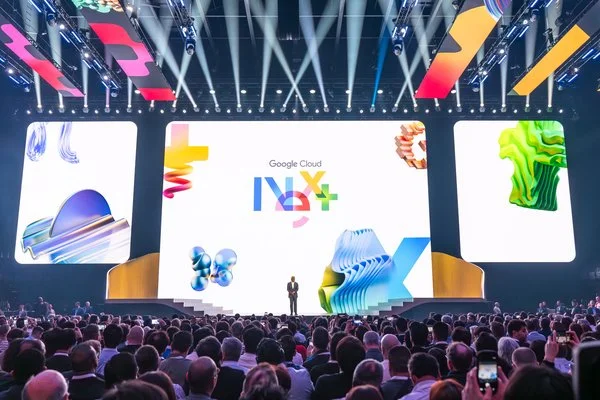
The latest updates from Google Cloud Next ‘26 highlight an urgent shift in how enterprises are adapting their infrastructure for an AI-driven future. Google Kubernetes Engine (GKE) is evolving rapidly to cater to an influx of AI workloads, making it evident that Kubernetes is becoming the operational backbone for many organizations harnessing generative AI technologies. With a staggering increase of 327% in multi-agent AI workflows within just a few months and 66% of enterprises relying on Kubernetes for generative AI applications, the implications are significant for both tech adoption and infrastructure optimization.
Elevating Performance and Security Amid AI Growth
The crux of the GKE updates is the necessity for infrastructure that not only meets the expanding complexities introduced by AI applications but also adapts dynamically to unpredictable demand. One of the most notable innovations announced is the GKE Agent Sandbox. This feature promises to support seamless execution of untrusted code and entire agents at scale, with remarkable performance metrics boasting 300 sandboxes per second at sub-second latency. Companies like Lovable leverage these capabilities to launch 200,000 projects daily, emphasizing that speed and security can coexist in scalable environments.
GKE Hypercluster: A Quantum Leap in Scaling
Another significant advancement is the introduction of GKE hypercluster, designed to simplify and enhance Kubernetes management across vast infrastructures. This new capability allows a single GKE control plane to manage up to a million chips distributed over 256,000 nodes, eliminating the operational complexities tied to managing multiple clusters. Businesses grappling with operational burdens can now unify their resources under a single capacity reserve, enhancing both control and efficiency. A distinctive aspect of GKE hypercluster is its reliance on Google's Titanium Intelligence Enclave, ensuring that sensitive model weights remain isolated and protected from even internal platform administrators, marking a substantial leap in securing proprietary AI assets.
Cutting-Edge Inference Capabilities
When it comes to inference performance, GKE now introduces advancements that significantly reduced the timeline to achieving state-of-the-art results. New features within the GKE Inference Gateway leverage machine learning to streamline latency by up to 70%, ensuring that AI applications can provide real-time responses without extensive manual tuning. Additionally, the implementation of automatic KV Cache storage tiering addresses long-context memory issues, resulting in notable performance improvements that are essential for realizing productive AI workloads.
Autonomous Reinforcement Learning Solutions
It doesn't stop with general AI models; Google has also recognized the urgency to confront bottlenecks associated with reinforcement learning (RL) workloads that often leave resources underutilized. New GKE capabilities—like the RL Scheduler and RL Sandbox—are designed to tackle these inefficiencies head-on. The RL Scheduler aims to combat the "straggler effect", while the SDL Sandbox offers isolation for efficient tool-calling and reward evaluation in milliseconds. These functionalities are developed to keep GPU and TPU accelerators optimally busy, addressing the chronic issues that impede AI projects' progress.
Intent-Based Autoscaling: A Paradigm Shift
As companies scale their AI applications, traditional autoscaling methods often create operational overhead and risk. GKE's new intent-based autoscaling addresses this challenge directly. By enabling custom metrics support natively within the infrastructure, organizations can scale their systems with unprecedented flexibility and speed. This approach not only hardens reliability but also slashes reaction times from 25 seconds to 5 seconds—a substantial improvement for organizations that depend on agility to meet fluctuating workload demands.
Continued Innovation Amidst Rapid Change
As Google amplifies its commitments to evolving GKE's capabilities, it remains clear that the goal is not merely to add features, but to enhance the entire construct of how AI applications are developed, deployed, and managed. This multifaceted approach reflects an understanding of the operational challenges in an AI landscape that is shifting rapidly. For industry professionals, it poses a significant opportunity to revisit and rethink existing strategies. Keeping abreast of these developments will be key, as they are not just enhancements—they are essential elements in enabling effective AI infrastructure and meeting future demands.
Ultimately, the evolution of GKE underscores a pivotal moment for enterprises engaging with AI and autonomous systems. If you're operating in this space, adapting to these new standards and leveraging the tools and solutions emerging from this ecosystem will be critical not just for survival but for leadership in an increasingly competitive environment.