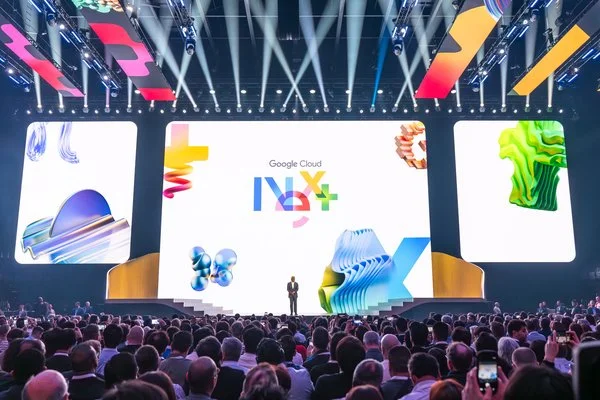
Google's recent announcements at Cloud Next signal a transformative shift in business intelligence (BI) with the integration of Looker and its Gemini AI technologies. This isn't just an enhancement of features—it's about reimagining data interaction entirely. The objective is to not only deliver data insights but to action those insights seamlessly and efficiently within organizational workflows.
Rethinking BI: A Move Towards Agentic Data
The most striking aspect of Google’s approach is the introduction of what they term “Agentic BI.” This concept revolves around the idea that BI extends beyond merely presenting data. Instead, it actively engages users by automating business actions based on the insights derived from the data. This is an evolution that recognizes the reality that data is most valuable when it drives business decisions in real time.
By anchoring this system in Looker's verified semantic layer, organizations can obtain trustworthy insights while mitigating risks associated with data interpretation, often referred to as "AI hallucinations." This earnest focus on accuracy addresses a critical pain point in the analytics space, where mistrust in data can severely hinder decision-making.
Conversational Agents and Automated Insights
One of the highlights from the announcements is the introduction of Looker BI Agents, which are set to redefine the relationship users have with their data. Rather than simply presenting information, these agents are designed to trigger actions based on user queries, thus integrating deeply with existing enterprise governance frameworks.
For instance, the upgraded Conversational Analytics agent leverages superior reasoning capabilities and a semantic grounding that enhances clarity in responses. This is particularly crucial for organizations dealing with complex data sets where ambiguity can lead to misinterpretation. The enhanced visibility features allow administrators to monitor agent performance effectively, leading to continuous refinement in predictive analytics.
Enhanced Self-Service Capabilities
The push for self-service BI tools is amplified with new AI assistants that eliminate much of the complexity usually associated with data exploration. Looker’s modern interface enables users to generate insights and visualizations through simple natural language queries. By bridging a familiar user experience with advanced data exploration features, organizations are empowered to perform ad-hoc analysis without sacrificing governance.
The introduction of features such as the Visualization Assistant, which can generate charts based on verbal commands, emphasizes a growing trend: making BI tools accessible to all layers of a business, not just data analysts. As John Pettit, CTO of Promevo, points out, Looker’s self-service capabilities allow for the flexibility of exploratory analysis while ensuring that data governance remains intact.
Integration With Developer Tools
Google isn’t leaving developers out of the transformative experience. With the Looker Extension for VS Code, developers can work more efficiently by using AI to convert business logic into code. This aspect of Looker fosters a synergy between business intent and technical implementation, which is often a friction point in many organizations. The potential for accelerated development cycles, thanks to the intelligent setup wizard and LookML AI Agent, is significant.
The Importance of a Governed Semantic Layer
Amid all the enhancements, the emphasis placed on a strong semantic layer cannot be overlooked. A governed semantic layer serves as the foundation for reliable data interpretation. In a landscape where AI systems can easily misinterpret or misrepresent data, Google’s strategy of embedding a robust semantic layer into its BI offerings stands out. This approach ensures a single source of truth, thereby enhancing organizational trust in data-driven decision-making.
Implications for the Future of Data
The overarching theme from Google's announcements is clear: the future of data-driven decision-making lies in creating an ecosystem where insights lead directly to actions. The introduction of Agentic Workflows in Looker is aimed at preemptively flagging inconsistencies and providing recommendations, effectively allowing businesses to navigate potential issues before they escalate. This strategic foresight becomes indispensable in today’s fast-paced business environments.
By leveraging Looker and Gemini together, organizations are positioned not only to analyze existing data but to derive actionable recommendations that enhance operational efficiency and strategic agility.
As businesses evolve, so too must their approaches to data. The advancements in Looker indicate a significant shift towards a more interactive and proactive BI model. If you’re working in this space, the questions to be asking now are: How can your organization adopt these technologies to create a more responsive data culture? What steps can you take to ensure that your data practices remain not just innovative but also trustworthy?