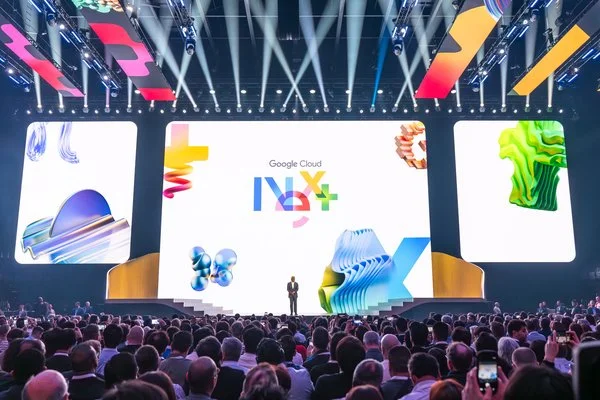
Google's recent unveiling of its enhanced capabilities within the Google Distributed Cloud (GDC) at the Google Cloud Next conference signifies a critical moment for enterprises and governments grappling with data sovereignty and the integration of AI. By bridging cutting-edge machine learning with stringent security requirements, GDC aims to redefine how organizations deploy AI solutions without compromising on local governance or data privacy.
Redefining Sovereignty in AI
The core narrative surrounding GDC reflects a growing necessity among enterprises to leverage advanced AI technologies while adhering to local data regulations. Previously, businesses with specific compliance mandates were often relegated to building their own AI infrastructures—a process fraught with delays, complexity, and cost. With GDC, organizations can now integrate sophisticated AI capabilities directly into their environments, thereby sidestepping the traditional hurdles of cloud reliance.
Google's GDC presents two deployment models to cater to varying operational needs: GDC air-gapped, which is a fully disconnected system operating on secured Google-provided hardware, and GDC connected, which allows businesses to utilize their own hardware while benefiting from Google's managed services. This dual approach makes it feasible for organizations to manage their AI workloads at both the edge and within their data centers, significantly enhancing operational flexibility.
Cutting-Edge Infrastructure Innovations
The technical enhancements introduced in GDC are particularly notable. For instance, the incorporation of NVIDIA Blackwell GPUs marks a substantial leap in processing capabilities. These new GPUs allow organizations to achieve data center-scale bandwidth, crucial for handling the intensive demands of on-premises AI applications.
Moreover, the inclusion of the A4 machine family offers a dramatic increase—about 2.25 times—in peak compute power for intensive inference tasks. Other machine families such as memory-optimized M2 and M3 are also now supported, catering to applications that require enhanced memory-to-vCPU ratios, essential for operating resource-heavy workloads like ERP and data analytics.
Elevating Storage Mechanics
Storage capabilities have also been expanded significantly. GDC now supports up to 6 petabytes of object storage per zone, which is a sixfold increase from its previous capacity. This is not merely a quantitative change; it represents a tenfold boost in performance metrics, specifically in terms of IOPS—from a modest 3 IOPS/GB to 30 IOPS/GB. Together, these enhancements minimize storage bottlenecks and empower organizations to handle larger datasets without sacrificing speed or reliability.
Advanced AI Services and Dynamic Management
With the addition of the AI gateway for sovereign environments, organizations can further optimize their AI operations. This middleware acts as a control plane for handling request routing dynamically, directing inference requests to the most appropriate AI models based on real-time factors such as cost and performance. Intelligent load balancing also ensures that computational resources are utilized efficiently, thereby optimizing throughput and minimizing idle time for GPUs.
Furthermore, this system features robust observability tools that allow organizations to maintain compliance by tracking and logging processes for every inference call. This level of transparency is essential for firms operating in regulated industries where data governance is paramount.
Agentic AI for Operational Effectiveness
Going beyond traditional AI capabilities, GDC introduces a new architecture focused on agentic AI applications. This architecture enables the deployment of autonomous agents—integral for executing tasks such as real-time data analysis or IoT integration—all within a secure environment. The ability to operate these agents in-house not only preserves data sovereignty but enhances operational agility, a necessity in today's fast-paced digital landscape.
Industry Implications and Future Directions
The implications are significant: organizations need not sacrifice the advantages of cloud-based AI solutions to meet local data regulations. Instead, GDC provides a viable pathway for leveraging state-of-the-art AI technology while ensuring data remains within their control. As Junhee Lee, CEO of Samsung SDS, noted, deploying Gemini on GDC “has significantly improved our global manufacturing,” highlighting the practical benefits companies stand to gain from this architecture.
Looking ahead, the momentum generated by these advancements in GDC positions Google as a compelling option for organizations considering a migration to sovereign AI environments. The challenge now lies in effectively realizing these capabilities as organizations actively seek to maximize their potential while adhering to evolving data governance frameworks.
For those operating within this space, the new GDC functionalities warrant close scrutiny not just for their immediate benefits, but for the broader shift they signify in AI deployment strategies. As enterprises strive for greater autonomy in their technological environments, Google's GDC stands at the forefront—shaping not only how AI will be utilized but redefining the terms under which it can thrive.
For more information on these developments, you can explore the full details on the Google Distributed Cloud website. Don't miss the chance to see these innovations demonstrated live in the upcoming sessions at GDC breakout sessions or at the Showcase at Next ‘26.