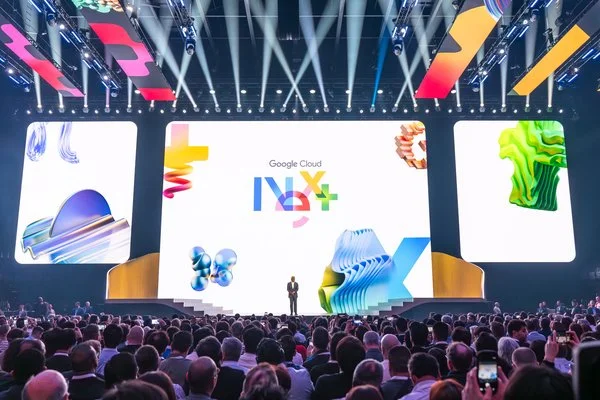
Unveiling Google Cloud's Latest Storage Innovations
Google Cloud is raising the bar once again with a slew of major updates to its storage infrastructure, showcased at this year's Google Cloud Next. The company is not merely tweaking existing features; instead, it’s transforming storage into a pivotal player in the AI ecosystem. In a time when organizations rely heavily on AI models and applications, the speed and efficacy of data storage have become much more than just operational concerns — they are now fundamental to the performance of AI workloads.
Why This Matters
Storage has evolved into a multi-faceted powerhouse, serving critical functions in both the training and deployment of AI models. Think of it this way: if storage falters, so do the accelerators designed to harness that data. Slow access can result in idle computing resources, sluggish AI responses, and ultimately, a bottleneck that restricts potential insights and processes. This shift emphasizes that performance is essential, but it’s far from the only requirement. The storage systems of today must also possess a level of intelligence that enables them to deliver contextual, actionable data that AI agents can leverage effectively.
What’s New?
Google Cloud is rolling out significant advancements that redefine aspects of storage technology:
- **Enhanced Performance Infrastructure:** The introduction of the Rapid storage features promises a staggering 10x boost in performance for high-demand applications, alongside a new Dynamic tier aimed at improving cost-effectiveness for managed Lustre solutions.
- **Smart Storage Capabilities:** This includes automated metadata annotation, enabling real-time insights into unstructured data and better integration with AI systems.
- **Intelligent Management Tools:** New dashboards that require no configuration allow users to monitor and manage their storage better, making it easier to optimize workflows and detect potential security vulnerabilities.
- **Rich Ecosystem Updates:** Google Cloud is fortifying connections within its ecosystem, enhancing offerings like NetApp Volumes and Filestore for GKE, which cater to diverse enterprise needs.
Together, these innovations mark Google Cloud’s commitment to redefining data operations within AI. To gain traction in this space, organizations will need to adapt quickly — and those that do will likely find themselves at a competitive advantage.
Performance Meets Intelligence
The integration of storage performance directly into the data layer minimizes latency and maximizes efficiency. New features within the Cloud Storage Rapid category significantly reduce the total cost of ownership while keeping the compute resources — including GPUs and accelerators — continuously engaged. Gone are the days when users had to compromise between reliability and speed. The capabilities of **Cloud Storage Rapid** illustrate this paradigm shift by providing both enduring reliability and remarkable performance. This combination could very well turn storage into the lifeblood of your AI initiatives.
For instance, the Rapid Bucket feature unlocks immense potential by delivering over 15 TB/s of bandwidth and enabling sub-millisecond latency — an impressive feat for any cloud service. Such improvements not only enhance data throughput but also accelerate the data-intensive workloads crucial to effective AI training and inference.
Smart Storage takes this a step further by allowing teams to extract contextual insights from their data without requiring complex pipelines. This can drastically reduce the time spent preparing data for machine learning, creating a more streamlined operation within organizations.
If you're serious about leveraging data in the AI era, these updates can't be overlooked. They represent a significant step towards harnessing data in a more effective, intelligent manner, positioning Google Cloud as a leader in the race to fully integrate storage with AI capabilities.Conclusion: Navigating the Future of AI with Cloud Storage
As we head into a new era defined by generative AI, the importance of a solid storage infrastructure cannot be overstated. The ability to handle increasingly sophisticated models requires not just more storage, but smarter management solutions. Google Cloud has positioned its storage platforms as a vital resource, cleverly designed to meet these emerging demands. So, what's really at stake here?
First, consider the challenge of the AI data bottleneck. High-throughput storage is not merely a luxury; it's a necessity. If you want to maximize the efficiency of your expensive GPUs and TPUs, you need to ensure they're continually fed with the data they require. With the right storage strategy, companies can not only eliminate performance bottlenecks but also significantly boost their return on investment.
Then, there's the shift from rigid, custom data pipelines to a dynamic knowledge base. This transition is pivotal for organizations that are looking to empower AI agents. By utilizing self-describing data objects, these systems can quickly analyze data without the tedious manual preparation that often slows down innovation.
Also, let’s not forget the risks associated with data management across massive datasets—potentially hitting exabytes. Organizations face a real threat of overlooking critical security risks and cost anomalies if their tools are outdated or fragmented. Zero-configuration dashboards can streamline the oversight process, making it easier to spot these issues as they occur.
Finally, embracing the entire storage ecosystem is essential for success. Migrating to the cloud should feel seamless, with your data center functioning in harmony with cloud environments. By leveraging automation and AI to ensure data resilience, businesses can create a more scalable infrastructure that’s prepared for future growth.
If you’re working in this space, take a moment to explore how these advancements can transform the management of your enterprise data. You can check out the [Google Cloud Storage console](https://console.cloud.google.com/storage) for a closer look, dive deeper into [Cloud Storage Rapid](https://docs.cloud.google.com/storage/docs/rapid/high-performance-storage), or catch insights from the upcoming [Next '26 storage sessions](https://www.googlecloudevents.com/next-vegas/session-library?session_id=3913124&name=google-cloud-storage-products-the-ai-ready-foundation-for-your-data). The landscape is shifting rapidly, and the companies that adapt will be those that thrive.