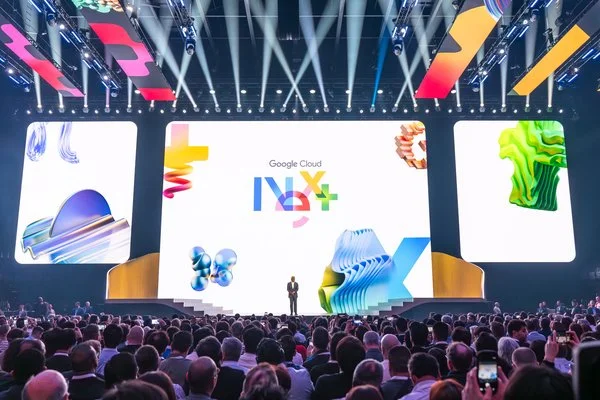
In the dynamic realm of AI application development, the race toward real-time processing and actionable insights is intensifying. Google's recent unveiling of its Agentic Data Cloud at Google Cloud Next represents a significant tipping point in how organizations can unify operational and analytical data, creating environments where AI agents can operate effectively in fast-paced decision-making scenarios. Essentially, this new architecture bridges the long-standing gap that has hampered effective AI deployment — the divide between data generation and action execution.
Closing the Actionable Insight Gap
The historical model of data architecture often leads to critical delays, as insights are separated from the systems that initiate actions. This latency constricts the abilities of AI agents to perform in the moment. The novel approach presented by Google's Agentic Data Cloud promises to revolutionize this by establishing connected systems that allow both real-time operational data and historical analytical context to work in tandem.
What sets this apart is Google's commitment to delivering a holistic framework through AlloyDB, BigQuery, and Spanner, which enables organizations to run both analytical and operational workloads on a single platform. By eliminating data silos, Google can facilitate high-stakes decisions with immediacy. This shift not only reduces the risk associated with fragmented systems but also enhances predictive capabilities.
Real-time Processing and Decision-Making
One of the key innovations is the blend of operational signals and historical data. Traditional data workflows typically require organizations to move data into analytical systems for insights, a process fraught with risks and inefficiencies. With AlloyDB’s capabilities, agents can tap into live operational data without the need for cumbersome data movement pipelines. This functionality is bolstered by the new Lakehouse federation which enables agents to query expansive historical datasets directly from AlloyDB.
This is a game-changer for organizations requiring instantaneous access to historical context during operational moments. For example, frontline applications can now enhance their responsiveness by accessing on-demand historical data, thus eliminating the friction that comes with conventional data handling. Conversely, situations where agents need to deliver complex insights extracted from data warehouses to end-users also see improvement through the new Reverse ETL for BigQuery features, which enable rapid data delivery with impressive speed.
Trust and Governance in AI Systems
The implications of these advancements extend beyond performance metrics to encompass trust and governance aspects. Poor data governance can lead to inconsistencies that disrupt the reliability of AI-driven conclusions. Google is addressing this with the expanded Knowledge Catalog, which provides a unified framework for data management across diverse systems. This not only minimizes the risks of “hallucinations” in AI outputs but fosters an environment where decisions are grounded in a comprehensive and accurate data context.
Organizations adopting these systems can expect not just a leap in operational efficiency but a fundamental transformation in how they govern their data, enabling a higher level of trust in AI-driven solutions.
Performance at Scale
For enterprises, performance at scale is non-negotiable. Google’s Agentic Data Cloud is designed to handle vast amounts of data while providing the high levels of throughput necessary for modern applications. Built on open-source standards like Iceberg and PostgreSQL, it aligns with leading industry practices, making it accessible and adaptable. These attributes are vital for enterprises as they build for future scalability, ensuring they won't hit a wall as they expand their data operations.
A Unified Approach to AI
The push toward a unified AI ecosystem is not merely about operational efficiencies but establishing an architecture that anticipates future needs. By incorporating graph and vector search capabilities directly into their operational databases, Google allows AI agents to engage in complex reasoning processes without geographic or logical barriers. This holistic capability streamlines the search and retrieval process, making it not just faster but significantly more relevant. The hybrid search ability integrates keyword relevance with semantic intent, allowing for nuanced understanding and more accurate responses — traits essential for conversational AI and advanced automation.
Conclusion: Implications for the Future
The introduction of Google’s Agentic Data Cloud marks a watershed moment for businesses looking to enhance their AI capabilities. For firms operating in sectors ranging from retail to financial services, the potential to integrate real-time data insights with operational actions can translate into not just improved efficiency but a competitive advantage.
As organizations grapple with the challenges of data silos and the risks of analytical lag, Google's vision of an interconnected data ecosystem offers a pathway to more agile decision-making. The emphasis on unifying operational and analytical frameworks is not merely about reactivity; it’s about fostering proactive strategies that capitalize on real-time data dynamics. This shift paves the way for a new generation of intelligent, agent-driven applications that could redefine operational landscapes across industries.